

Wisdom Tooth Extraction in Ladson, SC
Not every wisdom tooth needs removing. The ones that do usually announce themselves clearly.
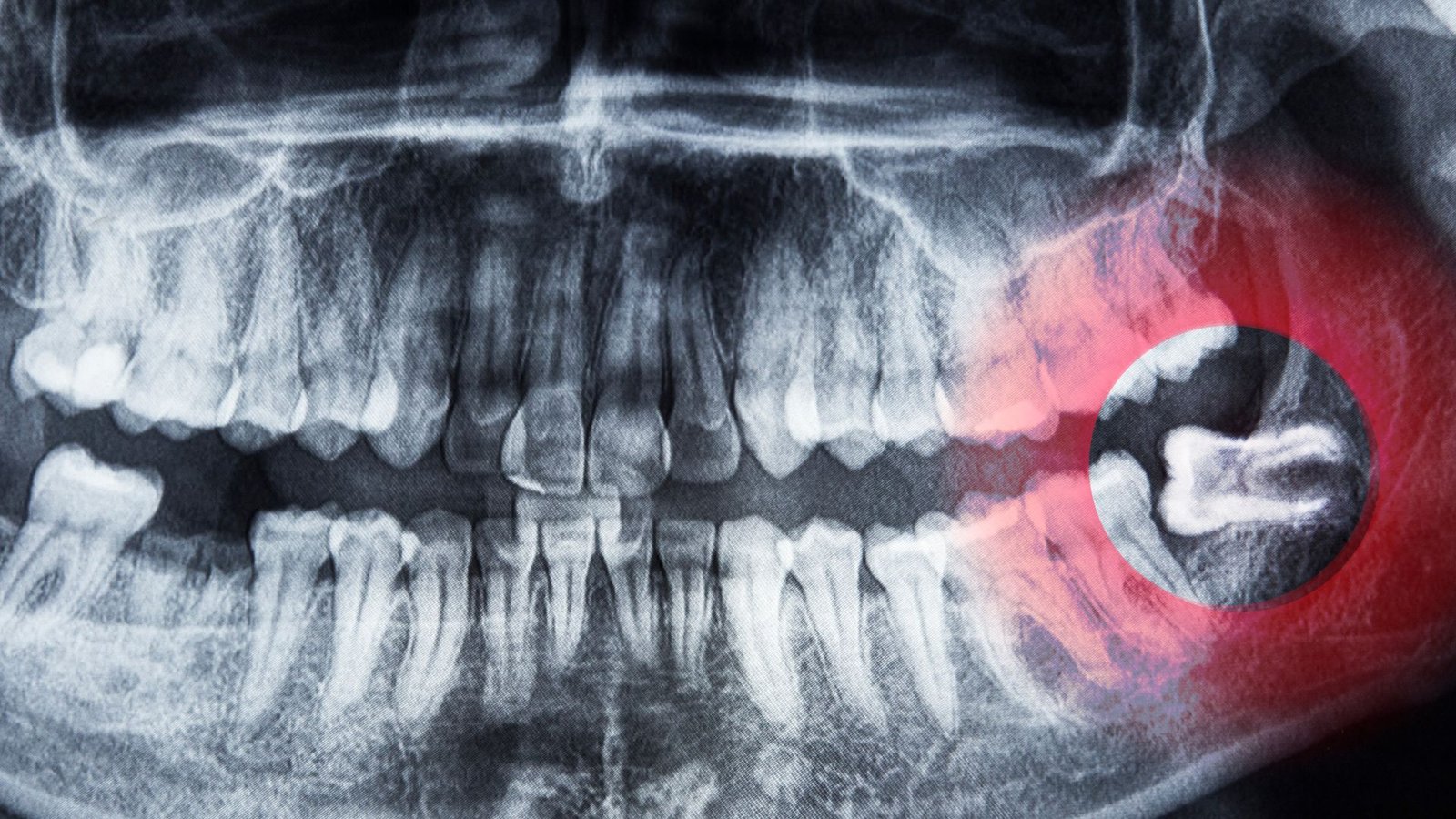
Impaction
The last teeth to arrive, into the least available space
Wisdom teeth are the third molars, typically erupting between seventeen and twenty-five. By that point the rest of the arch is established, and in many people there is simply not enough room at the back of the jaw for them to come through straight.
When there is not, the tooth becomes impacted: stuck against the tooth in front, angled sideways, or trapped entirely in bone. Partially erupted wisdom teeth are the most troublesome, because the flap of gum over them traps bacteria and food in a space no toothbrush reaches.
That produces pericoronitis, a recurring infection under the gum flap, which is the most common reason patients come in about wisdom teeth. It responds temporarily to cleaning and rinses, but tends to return until the tooth is removed.
Reasons to remove
When extraction is recommended
- Recurrent pain, swelling or infection around a partially erupted tooth
- Decay in the wisdom tooth or in the molar in front, which is often unreachable to clean
- Gum disease developing at the back of the mouth because the area cannot be cleaned
- A cyst forming around an impacted tooth, visible on an x-ray
- Damage to the root of the adjacent second molar from pressure
- The tooth biting into the cheek or the opposing gum rather than an opposing tooth
Wisdom teeth that are fully erupted, cleanable and causing no problems can often simply be monitored. Removal is not automatic.
The problem underneath
Why the second molar is often the real casualty
The tooth that suffers most from an impacted wisdom tooth is frequently not the wisdom tooth itself. It is the healthy second molar in front of it.
A wisdom tooth angled forward presses against the back of that molar at a point no toothbrush reaches and no floss passes. Decay develops there, on a tooth that is otherwise perfectly sound, and it is often only found on an x-ray once it is well established. Depending on how far below the gum the cavity sits, that molar can be difficult or impossible to restore.
The same geometry causes gum problems. The pocket behind the second molar cannot be cleaned, bone is lost in that area, and the damage remains even after the wisdom tooth is removed.
Why age affects the decision
In the late teens and early twenties the roots are not yet fully formed and the surrounding bone is less dense, so removal is quicker and healing is faster. The same tooth removed at forty means longer roots, denser bone and a more involved recovery. That is the argument for dealing with a problematic wisdom tooth when it is identified rather than waiting for it to become symptomatic.
None of which means every wisdom tooth should go. One that has erupted fully, meets an opposing tooth, and can be cleaned properly is doing no harm and is best left alone.
Common questions
Questions we hear most
Do all wisdom teeth need to come out?
No. If they have erupted fully, are in a functional position, can be cleaned properly and are causing no problems, they can be left and monitored. Removal is indicated when they are impacted, infected, decayed, or damaging the tooth in front.
How painful is the recovery?
Most patients have moderate discomfort and swelling peaking around day two or three, then improving. Simple extractions of erupted teeth are considerably easier than surgical removal of deeply impacted ones. Pain relief and clear aftercare instructions are provided.
How long is wisdom tooth recovery?
Typically three to seven days for the worst of the swelling and soreness to pass, and about two weeks for the gum to close over. Plan for two or three quieter days afterwards, particularly if all four are removed at once.
Should I have all four removed at the same time?
It is common and often sensible, since it means one recovery period rather than several. Some patients prefer doing one side at a time so they can chew comfortably on the other. Both are reasonable, and we will discuss which suits you.
What is dry socket and how do I avoid it?
It happens when the protective blood clot is dislodged, exposing bone, and it is painful. Avoid smoking, straws, spitting and vigorous rinsing for at least 24 hours. It is more common after lower wisdom tooth extraction than any other. If it occurs, call us, it is treatable.
Is there a best age to have them out?
Late teens to early twenties tends to be easier, because the roots are not yet fully formed and bone is less dense, so healing is quicker. That said, wisdom teeth are removed successfully at all ages when there is a reason to do so.
Do not wait it out
In pain today? Call us now
We keep time open for same-day emergency appointments, for new and existing patients.