
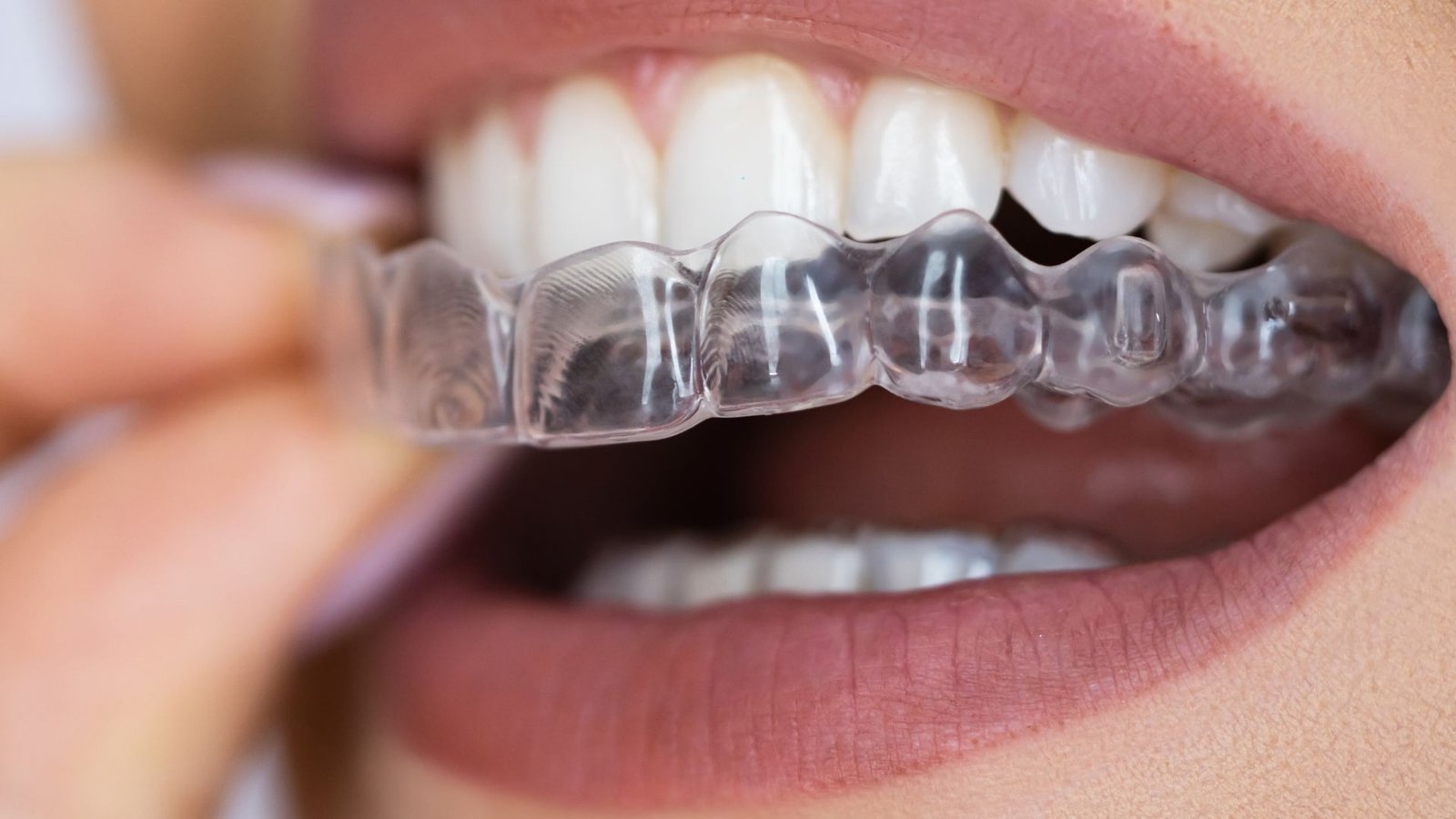
Night Guards in Ladson, SC
Most people who grind their teeth have no idea they do it. The damage shows up long before the habit does.

Bruxism
Grinding happens while you are asleep
Bruxism is clenching or grinding the teeth, usually during sleep and usually without the person knowing. The forces involved are far higher than normal chewing and are sustained for much longer, which is why the damage accumulates.
Over time it wears enamel flat, causes microfractures, makes teeth sensitive, loosens fillings and crowns, and strains the jaw joint. Many people first learn about it when a dentist points out wear patterns that do not match their age.
A custom night guard does not stop the grinding. It puts a precisely fitted layer of acrylic between your teeth so the guard absorbs the force instead of your enamel, and it lets the jaw muscles rest in a more neutral position.
Signs
You may be grinding if any of this is familiar
- Waking with a dull headache, especially around the temples
- Jaw soreness or tightness in the morning that eases through the day
- A partner who has heard you grinding at night
- Teeth that look flattened, chipped at the edges, or increasingly sensitive
- Fillings or crowns that keep coming loose or fracturing
- Aching teeth with no cavity to explain it
- A ridge of hard tissue along the inside of your cheek or the edge of your tongue
Getting one made
Two visits, then you are done
Evaluation
Dr. Mathew examines your wear patterns, jaw muscles and bite to confirm bruxism and rule out other causes of jaw pain.
Impressions
We take an impression or digital scan of your teeth. This is what makes a custom guard fit properly rather than sitting loose.
Fitting
The finished guard is checked and adjusted so your bite meets evenly across it. An unadjusted guard can make jaw problems worse.
What grinding costs
The damage is cumulative and quiet
Bruxism rarely announces itself. Most people learn about it from a dentist pointing at wear patterns, or from a partner who has heard it. By then the damage has usually been accumulating for years.
The forces involved are the issue. Normal chewing is intermittent and moderate. Clenching during sleep is sustained, often for long periods, and generates loads well beyond what teeth evolved to handle. Enamel flattens. Microcracks form and propagate. Fillings and crowns come loose or fracture because the cement joint fails under repeated stress. Teeth become sensitive as enamel thins and dentine is exposed.
The muscles pay a price too. The masseter works against sustained resistance for hours, which is why the classic presentation is waking with a dull ache at the temples and a jaw that feels tired before the day has started.
Why a guard rather than a fix
Nothing reliably stops bruxism, because it is driven by sleep architecture and stress rather than by the teeth. A guard does not treat the cause and does not claim to. It puts a replaceable layer of acrylic between the arches so the guard absorbs the load instead of your enamel, and it lets the muscles settle into a less strained position. Replacing a guard every few years is a considerably better outcome than replacing teeth.
Common questions
Questions we hear most
Why not just buy a boil-and-bite guard from the drugstore?
Over-the-counter guards are bulky, wear out quickly, and are not adjusted to your bite. An ill-fitting guard can let teeth shift or load the jaw joint unevenly, which sometimes makes jaw pain worse rather than better. A custom guard is made to your teeth and adjusted so the bite meets evenly.
Will a night guard stop me grinding?
No, and nothing reliably does, because bruxism is largely driven by sleep patterns and stress rather than the teeth themselves. The guard protects your teeth and eases muscle strain while the grinding continues harmlessly against the acrylic.
How long does one last?
Typically several years, though heavy grinders go through them faster. Bring it to your checkups and we will inspect it. A guard that has worn through is no longer protecting anything.
Is it uncomfortable to sleep in?
It takes a few nights to get used to. Most patients report they stop noticing it within a week or two. It should never be painful, and if it is, bring it back for adjustment.
Can grinding cause TMJ problems?
It can contribute. Sustained clenching strains the muscles and the joint itself. If you have clicking, locking or persistent jaw pain, see TMJ therapy, since a guard alone may not be the whole answer.
Does insurance cover a night guard?
Many plans cover part of the cost when grinding is documented, though some classify it under a separate category with its own limit. We will check your benefits and tell you the out-of-pocket figure before we make it.
Ready when you are
Schedule your visit in Ladson
New patients are welcome, and dental emergencies are seen the same day.