
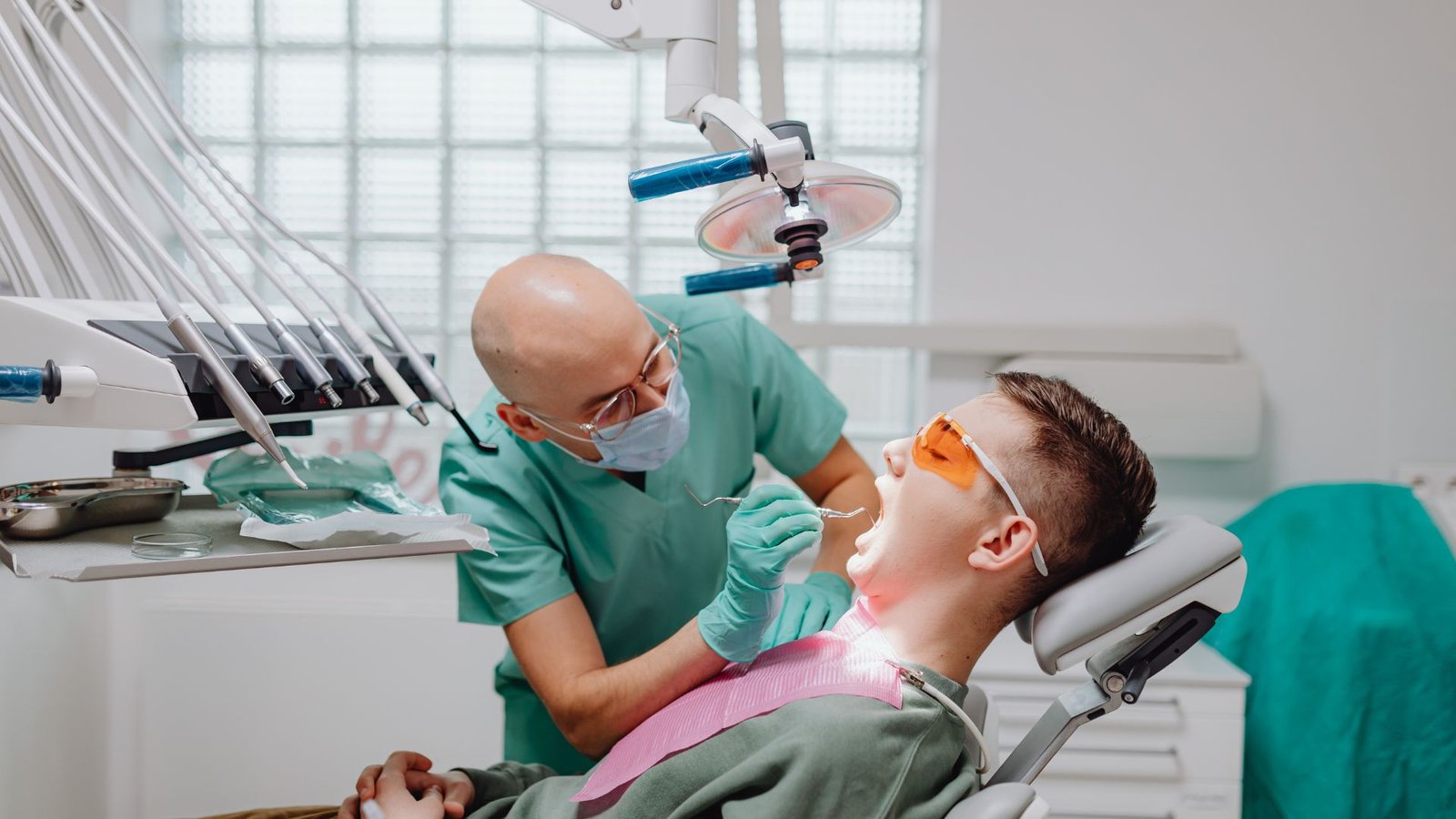
Teeth Cleaning in Ladson, SC
A routine cleaning removes what brushing leaves behind. Once plaque hardens into tartar, no amount of brushing at home will shift it.
Routine cleaning
What a hygienist removes that you cannot
Plaque is a soft film of bacteria that forms constantly. Brushing and flossing remove most of it. What is missed hardens within about 48 hours into tartar, a mineralised deposit bonded to the tooth that only a professional instrument will remove.
Tartar matters because it is porous and holds bacteria against the gumline, which is how gingivitis starts. Removing it every six months is the single most effective thing most people do to keep their gums healthy.
A routine cleaning, called a prophylaxis, covers the tooth surface above and just below the gumline. If disease has already moved deeper, a deep cleaning is the appropriate treatment instead. Dr. Mathew will tell you which one you need and why.
The appointment
What a cleaning involves
Assessment
The hygienist checks your gums, measures pocket depths where indicated, and notes any bleeding or recession.
Scaling
Hand instruments and an ultrasonic scaler remove plaque and tartar from tooth surfaces and just below the gumline.
Polishing
A gritty paste smooths the enamel and removes surface staining from coffee, tea and tobacco.
Review
Dr. Mathew examines everything, and you get specific advice on the spots you are missing at home.
Why the interval matters
Plaque hardens faster than most people expect
Plaque is a living film of bacteria that starts reforming on a clean tooth within hours. Brushing and flossing remove most of it. What gets missed begins mineralising within roughly 48 hours into tartar, which is bonded to the tooth and cannot be removed by any amount of brushing.
Tartar matters less because of what it is than because of where it sits. It is porous, it holds bacteria hard against the gumline, and the gum responds with inflammation. That inflammation is gingivitis, and left long enough the tissue detaches from the tooth and forms a pocket. Once a pocket is deeper than a toothbrush can reach, the process becomes self-sustaining and you are into deep cleaning territory.
Why six months is not a universal answer
Six months suits most people because that is roughly how long it takes for tartar to accumulate to a level that starts causing problems. But that rate varies considerably between individuals. Smokers, diabetics, people on medications that reduce saliva, and anyone with a history of gum disease build it faster and benefit from three or four visits a year. Dr. Mathew will tell you which applies to you based on what she actually sees, rather than defaulting to the standard interval.
What you will be told about your own technique
The hygienist can see exactly where you are consistently missing, because that is where the deposits are. That feedback is more useful than general advice to floss more, and it is worth asking for specifically.
Common questions
Questions we hear most
How often do I need a cleaning?
Every six months suits most people. If you have gum disease, smoke, have diabetes, or build tartar quickly, three or four times a year may be recommended. This is based on how fast bacteria return in your mouth specifically, not a general rule.
Does a cleaning hurt?
Usually not. If your gums are inflamed or you have not been in for a long time, it can be tender, because inflamed tissue bleeds and is sensitive. That improves markedly once the gums are healthy again. Tell the hygienist if anything is uncomfortable and they will adjust.
What is the difference between a regular and a deep cleaning?
A regular cleaning treats the tooth surface at and just below the gumline. A deep cleaning, or scaling and root planing, goes beneath the gumline to clean the root surface when gum disease has created pockets. Deep cleaning usually requires numbing and is often done in two visits.
Will a cleaning whiten my teeth?
It removes surface stains from coffee, tea, wine and tobacco, so teeth usually look brighter afterwards. It does not change the underlying colour of the tooth. For that you need professional whitening.
My gums bleed when they clean. Is that normal?
It is common, but it is not normal in the sense of being healthy. Bleeding indicates inflammation, which is the earliest stage of gum disease. The good news is that at this stage it is fully reversible with cleaning and better home care.
Is a cleaning covered by insurance?
Most dental plans cover two routine cleanings a year at or near 100%. We will verify your benefits before your visit and tell you what, if anything, you will owe.
Ready when you are
Schedule your visit in Ladson
New patients are welcome, and dental emergencies are seen the same day.