
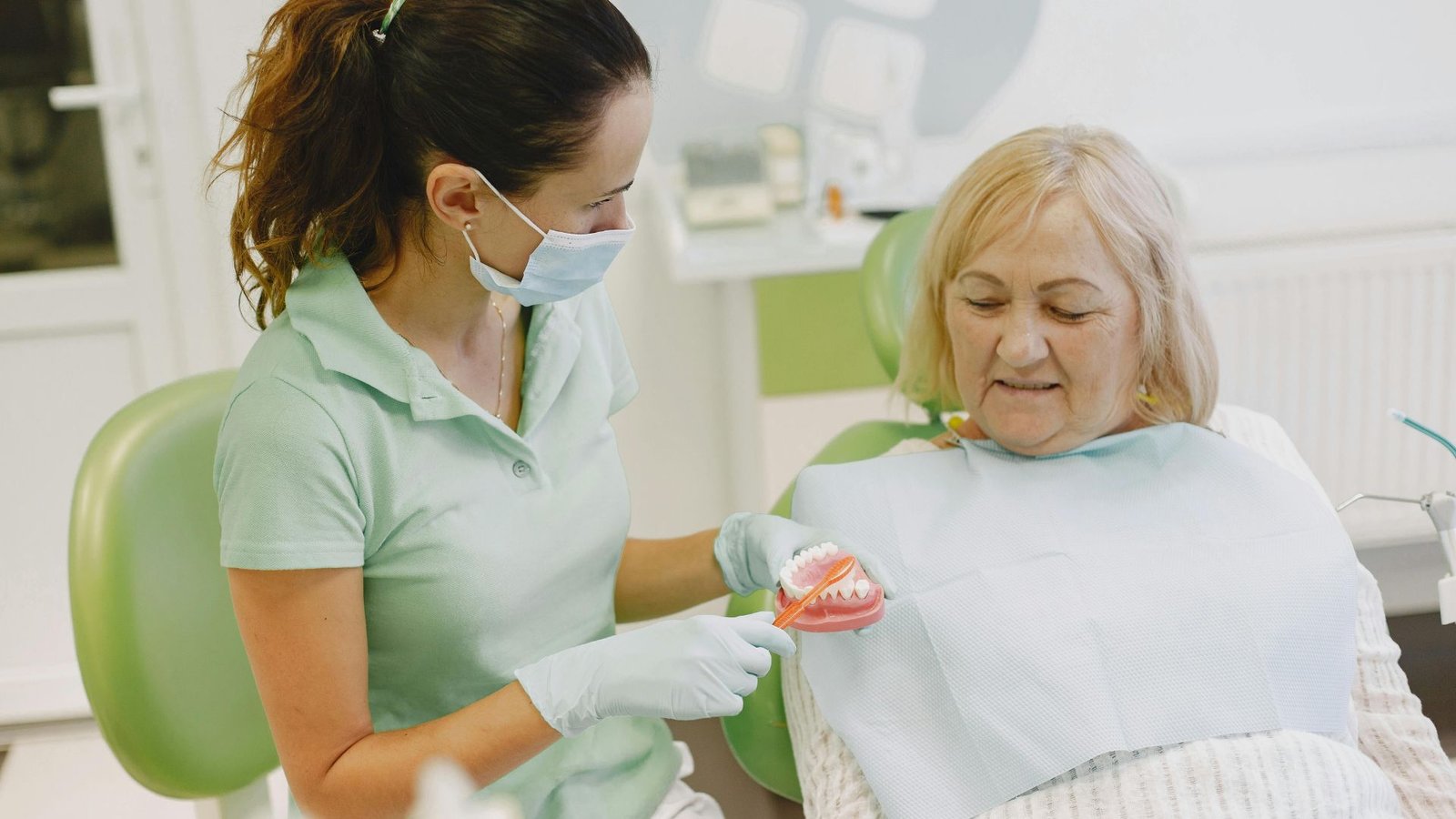
Dentures in Ladson, SC
Replacing many missing teeth at once. Modern dentures are a long way from what your grandparents wore.
Types
Full, partial, and implant-supported
A full denture replaces all the teeth in an arch and rests on the gum, held largely by suction and the shape of the ridge. A partial denture replaces several teeth while your remaining natural teeth stay, clasping to them for stability.
An implant-supported denture is the significant modern development. Instead of resting on the gum, the denture clips onto implants placed in the jaw. That eliminates the movement and slipping that patients dislike most about conventional dentures, and it substantially improves chewing ability.
The fixed version of that idea is All-On-4, where a full arch is permanently secured to four implants and never comes out at all.
Choosing
What each option offers
Full dentures
Lowest cost route to replacing a full arch. Removable. Rests on the gum. Requires adhesive for some patients.
Partial dentures
For patients keeping some natural teeth. Removable, clasps to remaining teeth, replaces several at once.
Implant-supported
Clips onto implants. Far more stable, no slipping, better chewing. Removable for cleaning.
Learn moreAdjusting
What the first few weeks are actually like
- Speech takes practice. Reading aloud at home for a few days speeds this up noticeably
- Start with softer foods cut small, and chew on both sides evenly rather than one
- Some soreness is normal at first, and adjustment appointments are expected rather than a sign something is wrong
- Increased saliva in the first days is common and settles
- Clean them daily and leave them out overnight unless told otherwise, so the tissue can recover
- Over months to years the ridge changes shape and dentures need relining to keep fitting
Come back for adjustments. Persisting with a sore spot rather than having it eased is how patients end up abandoning dentures in a drawer.
What changes over time
Why dentures need adjusting and eventually replacing
Bone exists to support teeth. When teeth are removed, the ridge that held them begins to resorb, and it keeps doing so for years. This is the single fact that explains most of what patients find frustrating about dentures.
A denture is fitted to the shape of your ridge on the day it is made. As the ridge changes shape underneath, the fit loosens. That is not a fault in the denture and it is not something you did wrong. It is why relines exist, and why a denture that fits perfectly at first will need attention after a few years.
Relining versus replacing
A reline resurfaces the fitting side of the existing denture to match the ridge as it is now. It is far cheaper than a new denture and buys several more years. Replacement becomes the better option when the teeth have worn down, the acrylic has discoloured, or the ridge has changed so much that the whole design no longer sits correctly.
Why implant support changes the picture
Implants slow bone loss because they transmit chewing force into the bone, which is what the bone needs to maintain itself. An implant-supported denture therefore does two things a conventional one cannot: it stops moving, and it slows the very process that makes conventional dentures loosen. That is the real argument for it, beyond comfort.
Common questions
Questions we hear most
How long does it take to get used to dentures?
Commonly a few weeks to a couple of months for eating and speaking to feel natural. The first fortnight is the hardest. Patients who attend their adjustment appointments settle in considerably faster than those who try to endure problems.
Will people be able to tell?
Modern dentures are made with individually shaded teeth and gum-coloured acrylic designed to look natural, including slight irregularity rather than a perfect row. Fit matters as much as appearance, since a denture that moves draws far more attention than one that does not.
Can I eat normally?
Most foods, yes, with practice. Very hard or very sticky items remain difficult with conventional dentures, and biting into things with your front teeth can dislodge an upper plate. Implant-supported dentures restore substantially more chewing force and remove most of these limits.
Do dentures need replacing?
Yes, periodically. The jaw ridge continues to resorb after teeth are lost, so a denture that fits today gradually loosens. Relining can extend its life, but full replacement is typically needed every five to ten years.
What about implant-supported dentures?
They clip onto implants rather than resting on gum, which removes the movement most patients dislike. The cost is higher because of the implants, but chewing ability and confidence improve markedly. Ask Dr. Mathew whether your bone volume supports it.
Will I be without teeth at any point?
Generally no. Where extractions are needed, an immediate denture can be placed the same day so you are not without teeth while healing. It will need relining or replacing later, since the gum changes shape considerably as it heals.
Ready when you are
Book a restorative consultation
You will leave knowing what it costs and what your options are, in writing.