
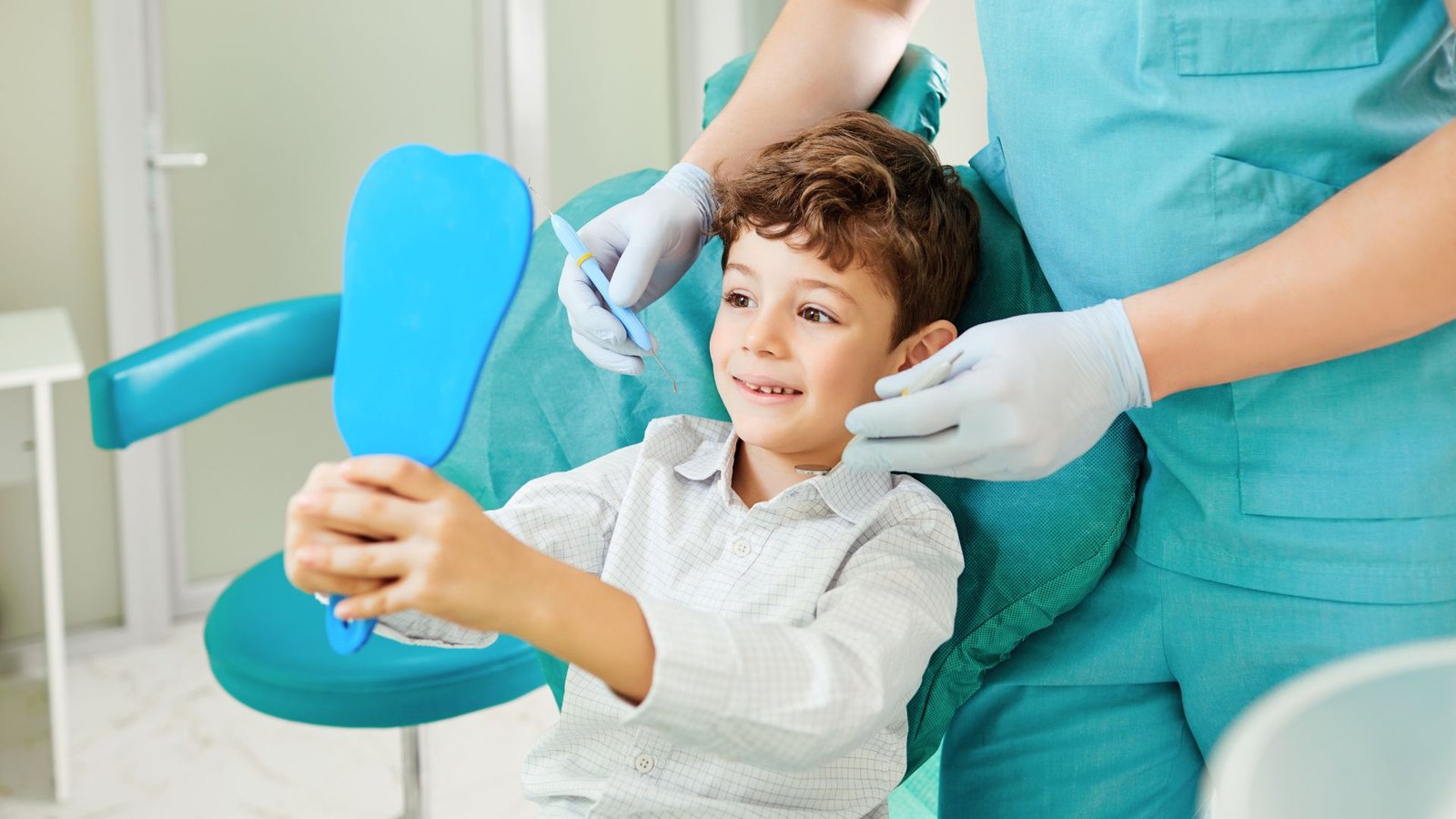
Pediatric Dentistry in Ladson, SC
The goal of a first visit is not a perfect cleaning. It is a child who is willing to come back.

First visits
Start early, keep it short
We recommend a first dental visit by the first birthday, or within six months of the first tooth. At that age the appointment is brief: a look at the teeth and gums, a conversation with you about brushing, bottles and diet, and letting your child sit in the chair without anything alarming happening.
That early, low-stakes exposure is the single best predictor of whether a child grows up comfortable at the dentist. Fear is much easier to prevent than to undo.
As children get older, visits expand to include cleanings, fluoride treatment, sealants on the chewing surfaces of molars, and monitoring how adult teeth are coming in.
What we provide
Care built around growing mouths
Exams and cleanings
Gentle, age-appropriate cleanings with plenty of explanation before anything happens.
Fluoride treatment
Strengthens developing enamel and reduces decay risk, applied in seconds.
Dental sealants
A thin protective coating on molar grooves, where most childhood cavities start.
Tooth-colored fillings
When a cavity does happen, repaired with composite rather than metal.
Learn moreGrowth monitoring
Watching how adult teeth erupt so alignment issues are caught early.
Learn moreSports guards
Custom mouthguards for children playing contact sports.
Learn moreAt home
What actually prevents cavities in children
- Brush twice daily with a fluoride toothpaste, supervised until roughly age seven
- Never put a child to bed with a bottle of milk or juice, which pools around the teeth overnight
- Limit sipping sugary drinks across the day, which matters more than the total amount
- Start flossing once two teeth touch, since a brush cannot reach between them
- Ask about sealants when the first permanent molars come in, around age six
- Keep checkups on schedule so small cavities are caught while fillings are still simple
The long game
What a first visit is really for
The clinical content of a first dental visit for a toddler is minimal. That is not a failure of the appointment; it is the point of it.
What determines whether someone becomes an adult who attends the dentist is largely set in childhood, and it is set by whether early visits were unremarkable. A child who sits in the chair several times before anything is ever done to them learns that the place is boring. A child whose first visit happens because something hurts learns something quite different, and often carries it for decades.
We see the consequences constantly in adults. A meaningful share of our patients have been away from dental care for years, and when you ask why, the answer frequently traces back to a childhood experience.
What we do differently with children
Visits are kept short. Instruments are shown and explained before they are used, never produced unannounced. Nothing is forced, and if a child needs to stop, we stop. Language matters too: we avoid words that introduce fear where none existed.
One request we make of parents: please do not use the dentist as a threat at home, and avoid telling a child it will not hurt. The second one plants the idea that it might. Saying we are going to count teeth is more accurate and more useful.
Common questions
Questions we hear most
At what age should my child first see a dentist?
By the first birthday, or within six months of the first tooth appearing. The visit is short and mostly about familiarity. Waiting until a problem appears usually means the child's first experience of a dentist is an uncomfortable one.
Why treat baby teeth if they fall out anyway?
Because they hold space for the adult teeth behind them, and because decay hurts. A baby tooth lost early can let neighbouring teeth drift into the gap, which causes crowding later. Untreated decay can also infect the developing adult tooth underneath.
What are sealants and does my child need them?
A sealant is a thin protective coating painted into the deep grooves of the back molars, where a toothbrush bristle cannot reach. It takes minutes, does not require numbing, and dramatically reduces cavities in exactly the spot where most childhood decay begins. Most children benefit once permanent molars erupt.
My child is very anxious. Can you still treat them?
Yes. We keep first visits short, explain every instrument before using it, and stop if a child needs a break. For higher anxiety, or for longer treatment, sedation dentistry is an option. Tell us when booking so we allow extra time.
Is fluoride safe for children?
Yes, at the doses used in dentistry. Professionally applied fluoride strengthens enamel while it is still developing and is one of the most well-studied preventive measures in medicine. We will discuss the right amount for your child based on their age and decay risk.
When should I ask about braces or aligners?
Around age seven is a reasonable point for a first look, because that is when enough permanent teeth are in to see how the bite is developing. Most children do not need anything at that stage, but catching a significant problem early can simplify treatment later. See Invisalign.
Ready when you are
Schedule your visit in Ladson
New patients are welcome, and dental emergencies are seen the same day.